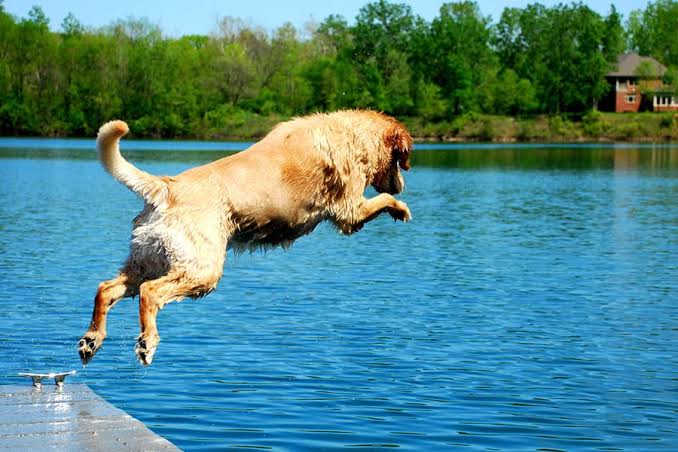
There are few things quite as joyful as watching your dog discover open water for the first time — nose up, paws going ten to the dozen, tail an absolute blur. Wild swimming is better with a dog. That’s just science.
But before you let your four-legged swim buddy loose on the nearest lake or river, there are some genuinely important things to know. This guide covers the lot: which dogs are built for it, what to watch out for in the water, and how to keep both of you safe and smiling.
Is Your Dog Actually a Natural Swimmer?
It’s tempting to assume all dogs can swim — they do have their own stroke named after them, after all. But the truth is a bit more nuanced. Breeds like Labradors, Spaniels, and Golden Retrievers have a long working history in water and tend to take to it brilliantly. Other breeds can genuinely struggle.
Flat-faced (brachycephalic) breeds — think Bulldogs, Pugs, Boxers, and French Bulldogs — are particularly at risk. Their short snouts mean they have to tilt their heads far back to keep their noses above water, which causes their rear ends to sink. That’s not a recipe for a confident swimmer. Dogs with long bodies and short legs, like Dachshunds and Basset Hounds, face similar challenges, working extremely hard just to stay afloat and tiring quickly.
The golden rule: never assume your dog can swim. Introduce any dog to water gradually, stay close, and watch their body language carefully. Anxiety or struggling are clear signs to get them out.
Build Up Slowly
If your dog is new to open water, don’t just bowl up to a lake and let them launch in. Start shallow. Look for gently sloping, sandy or gravelled banks where they can wade in at their own pace. Use positive reinforcement — treats, praise, enthusiasm — to make the whole thing feel like a brilliant idea rather than a terrifying ordeal.
Once they’re comfortable paddling in shallows, they’ll naturally venture deeper if they’re keen. Let them lead.
One very practical tip: if your dog is still a novice, consider wearing a wetsuit yourself. Inexperienced dogs sometimes try to use their human as a raft — complete with claws. Also, be careful not to get out of your own depth, as a wet dog is surprisingly heavy and could push you under.
Choose the Right Spot
Location matters enormously, both for safety and enjoyment. Here’s what to look for — and what to avoid:
- Good entry and exit points. Before your dog goes in, check there’s an easy way out. Gradually sloping banks are ideal; steep or slippery sides can trap a tired dog with no way to climb free.
- Calm, moving water. Only let your dog swim in calm conditions. Even small currents can cause strong swimmers to struggle, and tides and river levels can change fast.
- Solid, visible bottom. Avoid water with a mud or silt bottom — both you and your dog can get sucked in, and murky water can hide dangerous debris like fallen branches or fly-tipped rubbish.
- Check for restrictions. Some rivers, lakes, and nature reserves don’t allow dogs at all — often to protect nesting wildlife. Always check before you go.
- Avoid canals and reservoirs. Canals have low visibility and moving boats; reservoirs often have steep sides, deep water, and hidden drop-offs. Neither is a safe wild swim spot for dogs.
The Blue-Green Algae Warning (This One Is Serious)
This cannot be overstated: blue-green algae is one of the biggest risks for dogs in UK open water, and it can be fatal.
Blue-green algae (technically cyanobacteria) is most common in still or slow-moving fresh water — lakes, ponds, and flooded fields — particularly during warm weather when it blooms rapidly. It can appear as a greenish or brownish scum on the water’s surface. The British Veterinary Association warns that the toxins it produces can be harmful and potentially fatal to dogs even in very small quantities.
Critically, dogs don’t just ingest it by drinking — they can also pick it up by swimming through contaminated water and then licking their fur clean afterwards. Symptoms can develop within 15 minutes to an hour of exposure. There is currently no known antidote, so speed is everything: seek emergency veterinary treatment immediately if you suspect your dog has been in contact with it.
- Avoid any water with visible scum, foam, or an unpleasant smell.
- Look out for dead fish, which can be a sign of high algae concentrations.
- Check local council websites and the Bloomin’ Algae app (run by the UK Centre for Ecology and Hydrology), which maps confirmed sightings and lets you set up alerts for your area.
- If in doubt, keep your dog well back from the water’s edge — toxic blooms can be blown to the shore even if the main body of water looks clear.
- Always rinse your dog’s coat thoroughly with clean water after any wild swim, and wash your own hands too.
Leptospirosis: Get the Jab
Another open-water health risk worth knowing about is leptospirosis — a bacterial infection spread through the urine of infected animals (mainly rats) that contaminates rivers, ponds, and canals. Dogs who spend time swimming in natural water are at higher risk, and the disease can cause serious organ damage.
The good news is it’s preventable. Most UK vets recommend annual vaccination against leptospirosis as part of your dog’s yearly booster. If your dog is a keen wild swimmer, make sure their vaccinations are up to date before you head out — and mention your swimming habits to your vet so they can advise on the right vaccine coverage. Young puppies should not swim in lakes or rivers until they are fully vaccinated.
One extra note for spot-on flea treatment users: if your dog regularly swims in open water, speak to your vet about alternative parasite protection. The chemicals in spot-on treatments can wash off into waterways and harm aquatic wildlife.
Always Bring Fresh Drinking Water
Your dog will almost certainly want to drink from whatever body of water they’re swimming in — especially if they’re working hard. Don’t let them. Bring plenty of fresh water and offer it frequently. Open water can carry bacteria, algae toxins, and parasites. At the coast, salt water ingestion can cause vomiting, diarrhoea, and dehydration surprisingly quickly.
Know When to Use a Life Jacket
A well-fitted dog life jacket is a genuinely useful bit of kit — especially for breeds that aren’t natural swimmers, deeper water, rivers with any current, or dogs that are elderly or have health conditions. A good one will have a handle on top so you can lift your dog clear of the water if needed. Put it on before they enter the water, not after.
Even fit, experienced dog swimmers can get tired. Exhaustion in open water is a real risk, and dogs can’t always bark for help while they’re swimming — so stay alert, stay close, and be ready to act.
After the Swim
- Rinse your dog’s coat with fresh water to remove bacteria, algae, or salt.
- Dry their ears thoroughly — especially breeds with long, floppy ears like Cocker Spaniels and Basset Hounds, which are prone to ear infections after swimming.
- Give them fresh water to drink and something warm to rest on if it’s a cold day.
- Monitor them over the next few hours. If they seem unwell — vomiting, lethargy, seizures, or unusual behaviour — contact your vet straight away and mention that they’ve been swimming in open water.
A Note on Cold Water
Cold water affects dogs too, though in different ways to humans. The RNLI defines anything below 15°C as cold water, and the UK’s lakes and rivers are in that territory for much of the year. A dog who tires suddenly in cold water, or one who isn’t used to it, can get into trouble fast. Keep first swims short, watch for shivering after they get out, and warm them up with a towel and a walk before heading home.
Wild swimming with your dog is one of the genuinely great joys of being outdoors in the UK. Get the safety basics right and you’ll have an adventure companion who’s as enthusiastic about finding the next spot as you are. Now go find some clean, flowing water — they’re already waiting by the door.