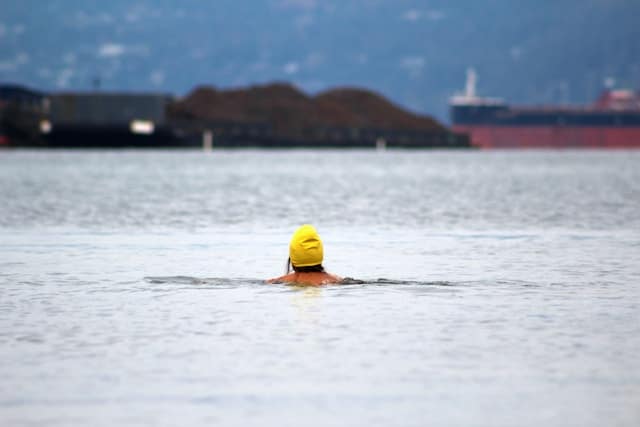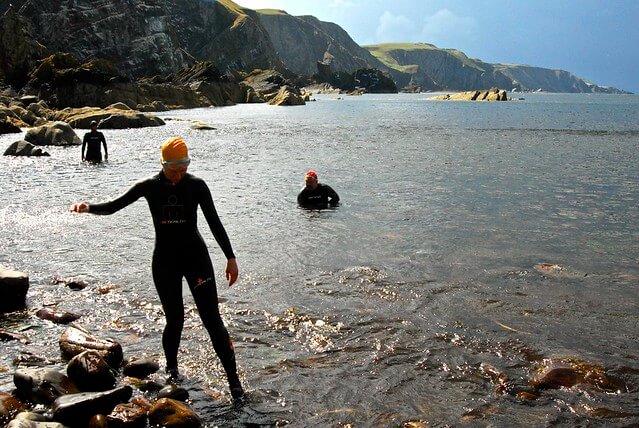
There’s a moment in early September when everything shifts. The light turns golden, the crowds thin out, the car parks empty — and the water is still gloriously swimmable. Autumn is, quietly, one of the best seasons to be a wild swimmer. If you’ve never swum past August before, you’re missing something special.
That said, the season does ask a little more of you. Water temperatures drop, daylight shrinks, and cold water risks become more real. Here’s everything you need to know to swim joyfully — and safely — through autumn.
The Water Is Still Warm (For Now)
Here’s the good news: autumn doesn’t mean instant cold. Because water retains heat far longer than air, you’ve often got weeks of comfortable swimming ahead after the summer ends. In fact, sea temperatures in the UK tend to peak in late August and early September — sometimes even into October along the south coast.
Inland waters are a different story. Rivers and shallower lakes cool faster than the sea, so keep an eye on temperatures as the weeks roll on. A waterproof thermometer is a handy bit of kit to bring along, and you can check coastal readings at sites like seatemperature.org before you head out.
Know Your Cold Water Threshold
As autumn deepens, the cold water safety rules matter more and more. The RNLI is clear on this: anything below 15°C is defined as cold water, and it can seriously affect your breathing and movement. Cold water shock — that involuntary gasp reflex when you hit the cold — is a real danger, and it catches people out even on seemingly mild days.
The fix is simple but non-negotiable: get in slowly. Walk in gradually, splash water on your face and neck, and don’t attempt to swim until your breathing has settled. The RNLI advises waiting around 60 to 90 seconds for the cold shock response to pass before you push off from shore. Never jump or dive straight in.
Also bear in mind that it’s not just water temperature that counts. Wind chill and air temperature affect how quickly your body cools before and after your swim — so a crisp autumn morning feels very different to a calm afternoon at the same water temperature.
Shorten Your Swim as It Gets Cooler
One of the most important mindset shifts for autumn swimming: your time in the water should shrink as temperatures drop. The colder the water, the less time you should spend in it. This isn’t about being wimpy — it’s about how your body works. As blood rushes to your vital organs in cold water, your arms and legs weaken. Getting out while you still feel strong is the goal.
Watch out for afterdrop too — the phenomenon where your body temperature actually continues to fall for a while after you exit the water. Get warm layers on quickly, have a hot drink ready, and don’t stand around chatting in a wet costume.
Kit Up for the Season
You don’t necessarily need a full wetsuit in September or early October, but it’s worth thinking about what you’re wearing as temperatures trend downward. Here’s a rough autumn kit checklist:
- Wetsuit — worthwhile for longer swims or as the water drops below 15°C; it also increases buoyancy and reduces cold water shock risk
- Neoprene gloves and booties — hands and feet feel the cold hardest; these make a dramatic difference to how long you can comfortably stay in
- Bright swim hat — visibility matters, especially at quieter spots with no lifeguards. The RNLI recommends a brightly coloured cap for all open water swims
- Tow float — adds visibility and gives you something to hold onto if you need a rest
- Changing robe — an absolute autumn essential for getting warm fast after your swim
- Hot drink and a snack — not optional. This is part of the swim, not an afterthought
Swim with Others — Especially Now
Autumn brings quieter beaches and fewer people around — which is part of the magic, but also means you need to be more careful about swimming alone. Out of season, there are no lifeguards on most beaches and far fewer people nearby if something goes wrong.
The RNLI strongly advises never swimming alone in open water. If you do go solo, tell someone exactly where you’re going and when you expect to be back. Better still, bring a friend, or join a local wild swimming group — most areas have them, and they’re a wonderful way to stay connected to the water through the colder months.
Always carry a means of calling for help — a mobile phone in a waterproof pouch, and a whistle. In a coastal emergency, call 999 and ask for the Coastguard.
Check Water Quality Before You Go
Autumn rain can stir things up. Heavy rainfall washes agricultural runoff and other pollutants into rivers and the sea, so it’s worth checking water quality after prolonged wet weather — which, let’s be honest, is not hard to come by in a UK autumn.
The Environment Agency’s free Swimfo service monitors 451 designated bathing waters across England and gives you up-to-date quality reports. As a general rule, the closer you are to a water source — think upland streams and mountain lakes — the cleaner it’s likely to be. The further downstream, the more caution is warranted.
Savour What Autumn Gives You
For all the prep, don’t lose sight of why you’re out there. Autumn swimming has a texture all of its own: mist rising off still water, leaves drifting past as you float, the particular silence of a lake when summer is finally done. The wildlife is extraordinary too — look out for webs jewelled with dew at the water’s edge, and listen for the distant sound of the deer rut echoing across open hills.
Autumn rewards the swimmers who show up. Get in slowly, get out warm, and you’ll find it earns its place as your favourite season in the water.